

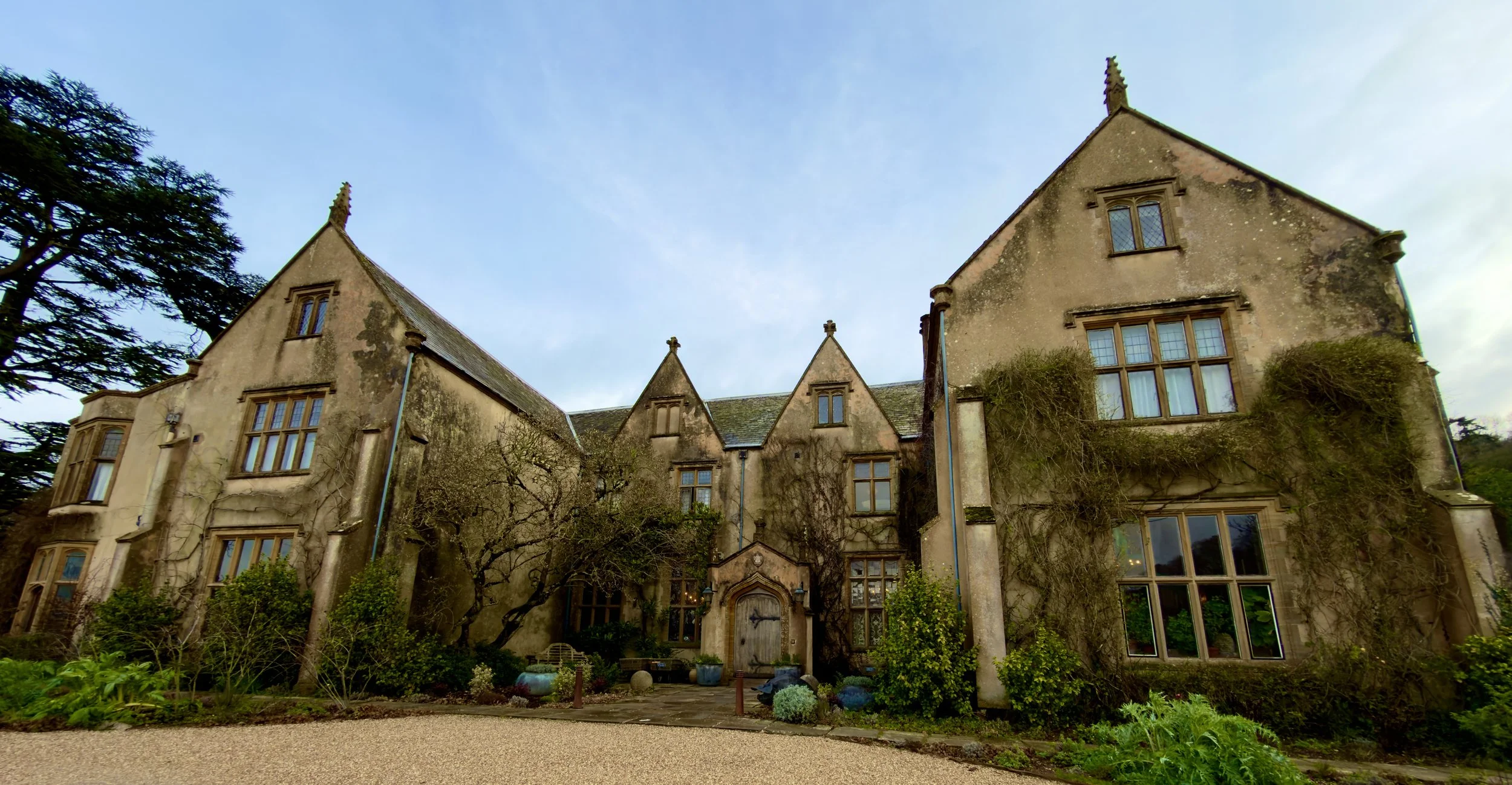
The Pig at Combe in Devon was an estate originally built by the half-brother of William the Conqueror around 1066
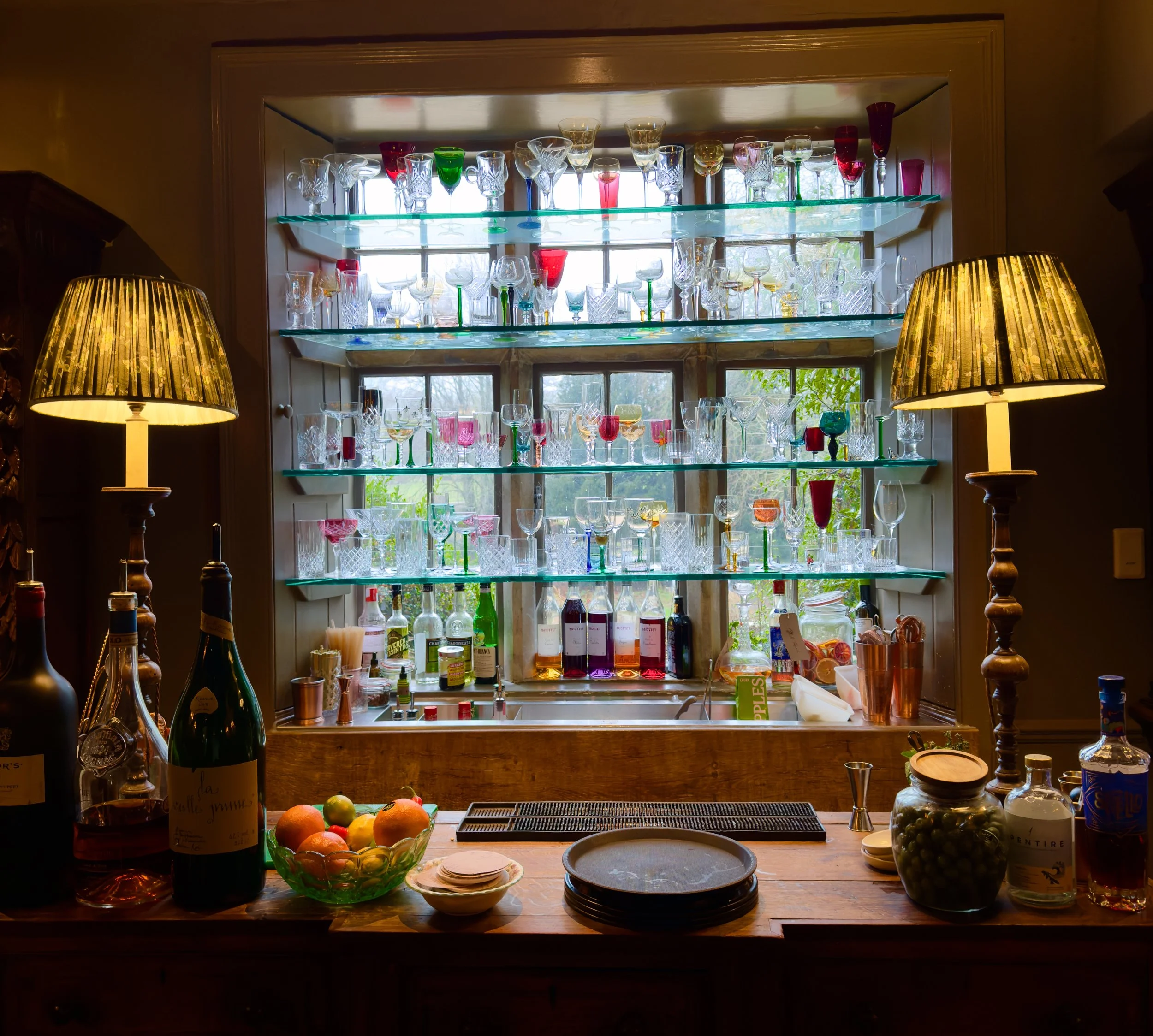
Coloured glass adorn most of The Pig’s cocktail salons
Photo: AJT
There are many ways to explore England. You can ride the train from city to city, float down the Thames, or spend a week politely queueing for things in London. But there is another way to see the country — slower, more picturesque, and considerably more delicious.
Not literal pigs (although many of their friends, the sheep, appear in nearby fields), but The Pig — one of Britain’s most charming luxury boutique hotel groups. These country‑manor hotels operate on a philosophy so simple it borders on genius: they are, in their own words, “restaurants with rooms.”
The idea is the creation of British hotelier Robin Hutson, a pioneer of modern boutique hospitality who previously co‑founded the Hotel du Vin chain before launching The Pig concept in 2011. The brand’s defining motif is their famous “25‑mile menu,” meaning most ingredients served in the property’s restaurant come from within a 25‑mile radius — many grown directly in the hotel’s own kitchen garden (in which each Pig offers a daily garden tour for their guests).
For many Pig pilgrims, the hotel and restaurant are not the only draw but so is the surrounding countryside, city or villages.
So I decided to follow what I came to call the Pig Trail — a road trip linking several of the properties by car: Cornwall, Devon, Bath and the Cotswolds. (Note: There are also Pigs in Dorset, Hampshire, Kent and West Sussex, nine in total, but I focused on the ones in the country’s south-west region.)
For a Montrealer driving in the U.K., the first challenge is remembering the steering wheel is on the “wrong side “of the car.
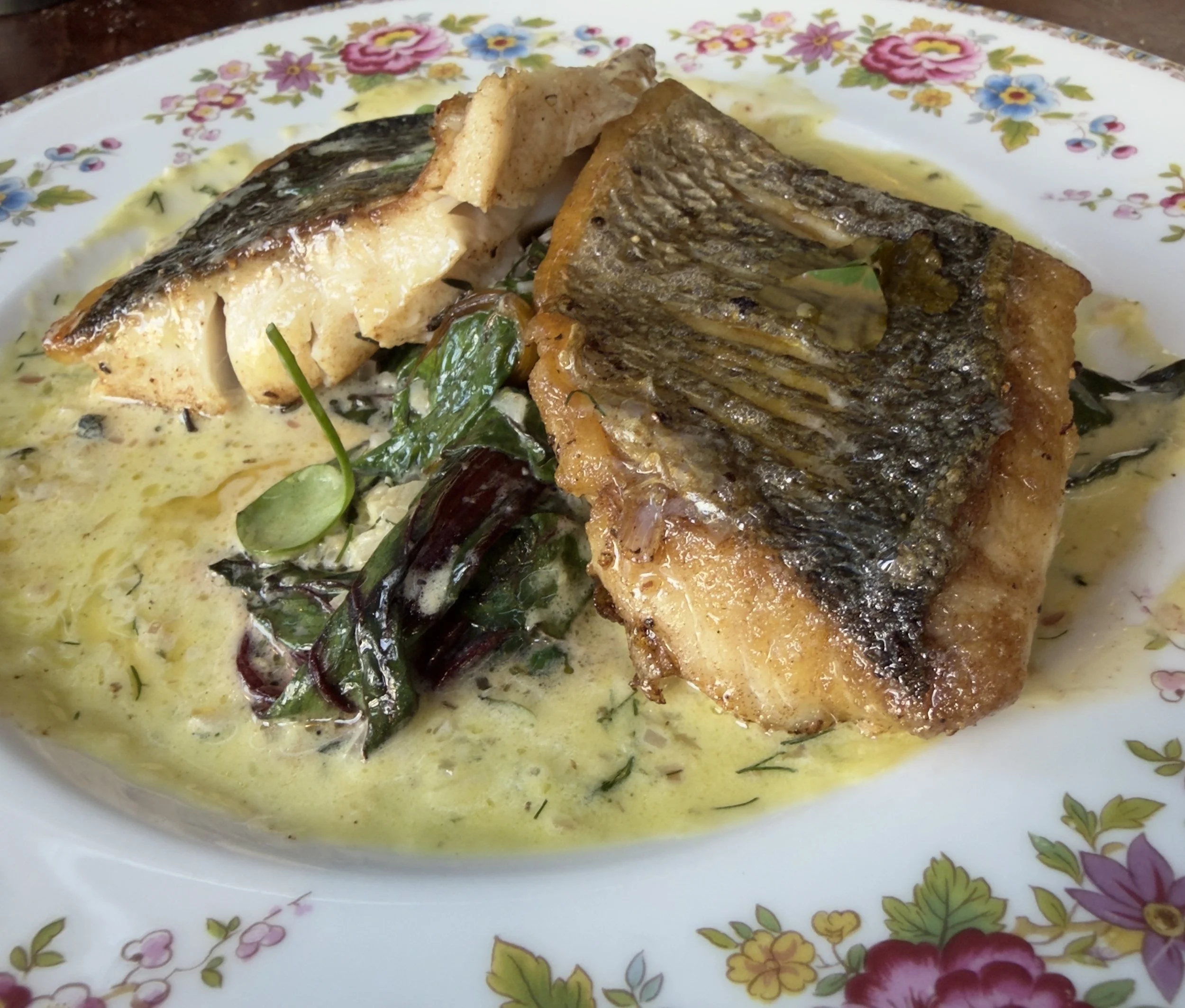
Line-caught seabass fillet was one of the highlights of The Pig’s 25 mile menu
Photo: AJT
Just getting out of the Heathrow airport gave me a fright! “Look right, stay left” became my mantra behind the wheel.
While the main motorways are quite efficient, the second challenge is navigating country lanes that appear to have been designed originally for horses and very thin ones at that!
But that is part of the joy, er, experience.
The Pig hotels are rarely easy to find. They hide in valleys, behind hedgerows, or down winding country roads that make you wonder if your GPS has begun hallucinating.
And then suddenly, you arrive — usually in front of a breath-taking, historic mansion surrounded by luscious gardens (The Pig in Devon, for example, was built around 1066 by the step-brother of William the Conqueror!)
At the Pig, the gardens are not decoration. They are the beating heart of the entire enterprise.
Rows of herbs, vegetables, edible flowers and fruit trees stretch across the grounds. Gardeners wander the beds with baskets and clippers harvesting ingredients that will appear on plates a few hours later. Chefs design menus based not simply on what they wish to cook, but what the garden — and nearby farms — have on offer.
The result is food that tastes unmistakably of the place you are in.
The aesthetic across the Pig hotels is best described as modern rustic with a wink of Victorian eccentricity. Antiques mix with reclaimed wood, colourful bar glassware glows in the light, and you might discover a taxidermy bird or a pig sculpture quietly observing the room.
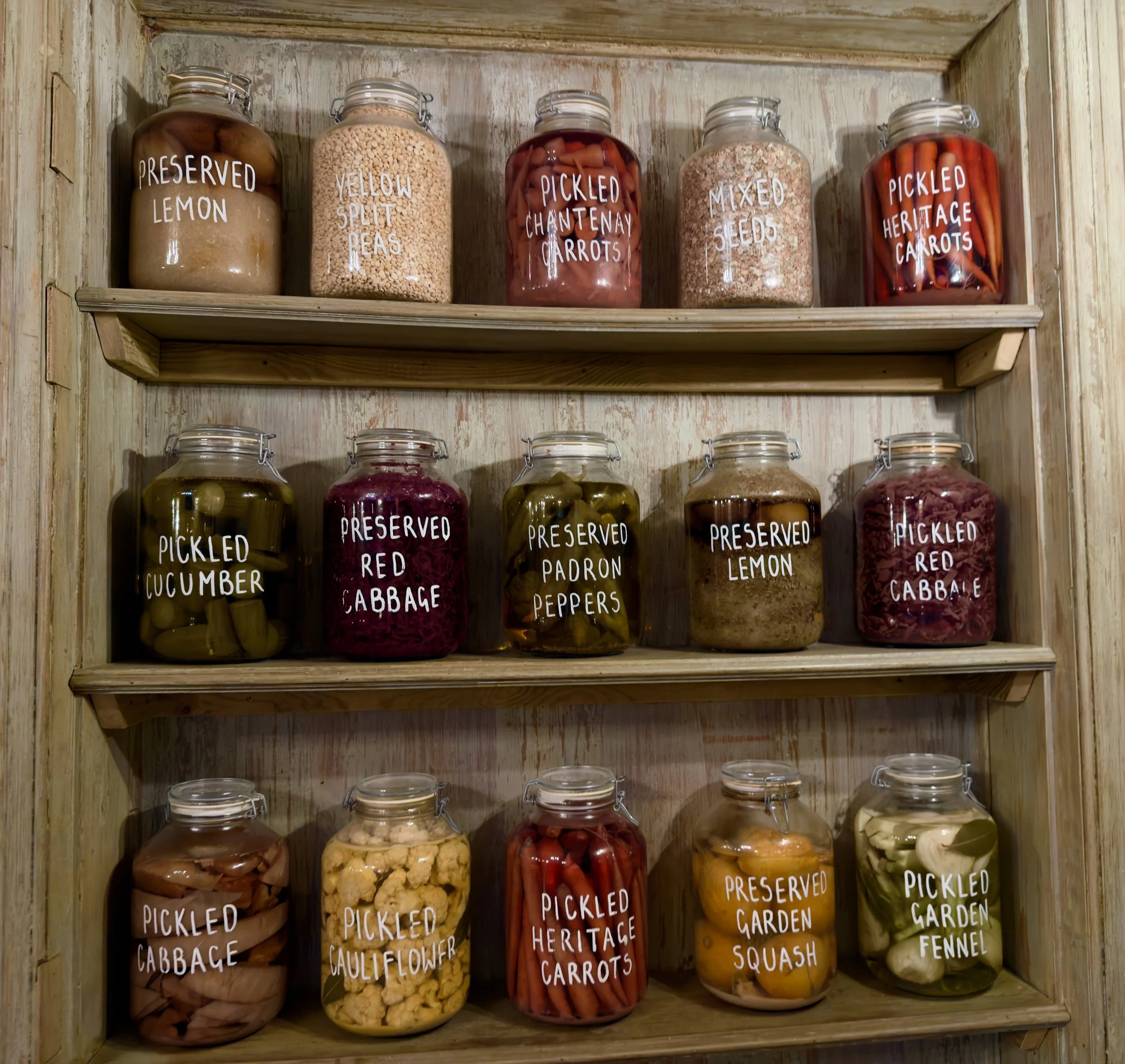
Homemade preserves and pickles are a staple of The Pigs’ pantries
Photo: AJT
The lounges are irresistibly comfortable. Fireplaces crackle. Books are everywhere. Guests wander between garden, bar and dining room as though visiting a particularly stylish friend’s house.
My journey began at The Pig at Combe (in Devon)
where the countryside is pastoral with stone cottages dotting the landscape, hedgerows framing the roads, and wild pheasants running freely in the farmers’ fields.
During my stay at Combe dire warnings were being broadcast on the local BBC stations about a once-in-a-generation winter storm barreling towards the region. There was considerable comfort, therefore, to know that our communal shelter for the night was within a stately manor that had withstood the elements for 940 years thus far, so surely, it would survive a few more nights of inclement weather.
At least we could seek refuge in the dining room and feast on their scrumptious offerings while we weathered the Armageddon! That’s certainly what I elected.
The lunch menu, in my case, featured a West Balson pork chop served with creamed cabbage and bacon with a side of honey roast parsnips. Divine! For dinner, I savoured the smoked Chalk-stream trout with pickled cucumber and cider dressing. This dish still lingers in my taste bud memory banks several weeks later. This was followed by a main of line-caught seabass fillet with celeriac puree and garden herb butter. All of these were enjoyed while eyeing the rains hammering the centuries-old lead-paned windows on one side and the calmness of the roaring wood fire under the watchful eyes of a stuffed deer-head over the fireplace. Can life get much better than this?
The next day, having collectively survived the evening’s onslaught, relieved guests staggered into the dining to be rewarded for our heroism with a breakfast buffet fit for an eleventh century conqueror. Featuring in-house baked pastries as well as farm fresh eggs this country seems famous for, in addition to local honeys and jams fashioned from the bounty of the local bees and berry bushes found throughout the grounds, suffice it to say eating at The Pigs is a culinary experience that you will not soon forget! This is why their dining rooms are full for virtually every meal as dinners flock here from the surrounding community as they have come to know that these are the best meals in town.
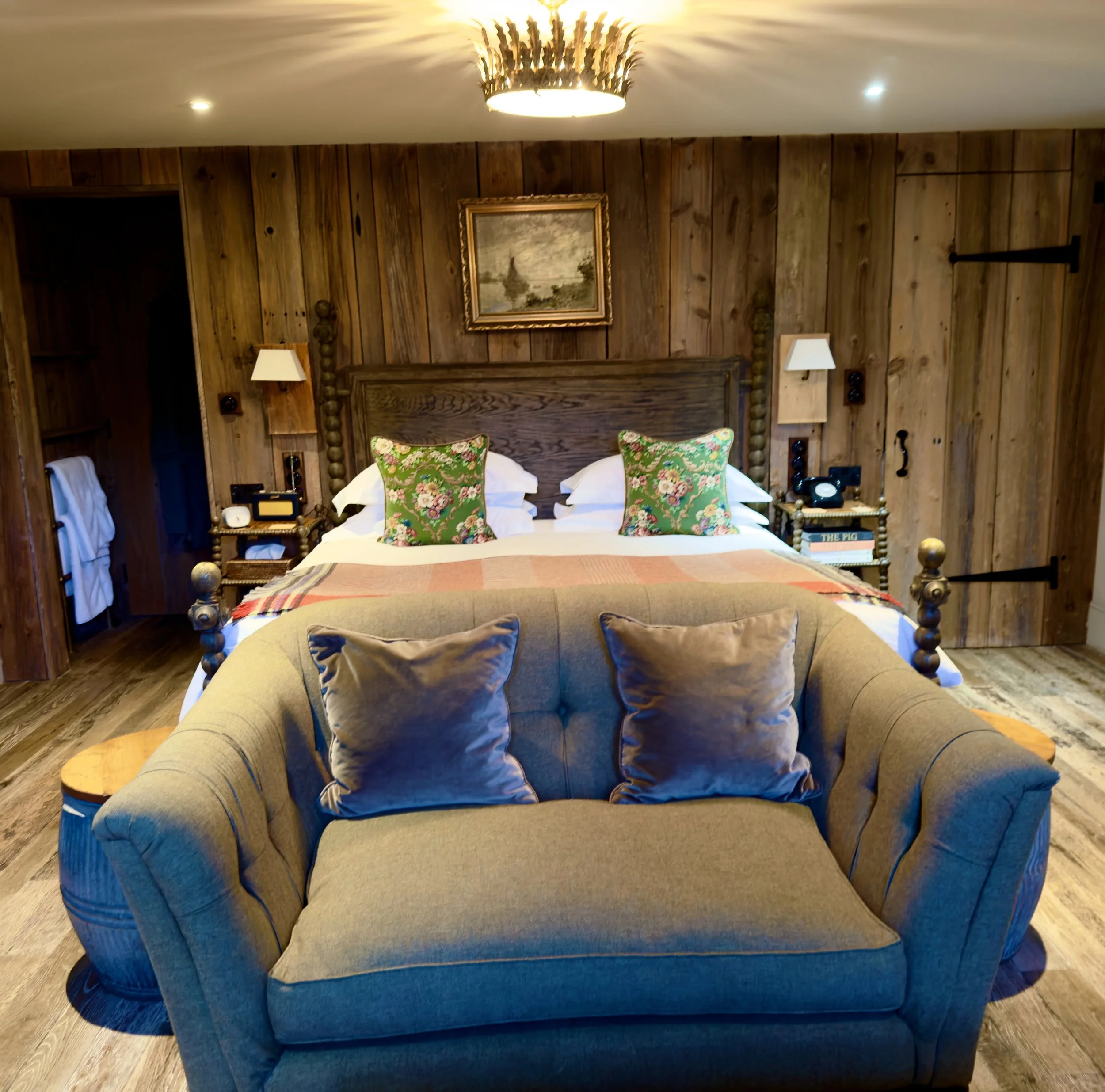
A guestroom at The Pig at Harlyn Bay
Photo: AJT
My next stop was at The Pig at Harlyn Bay (in Cornwall) which is an area surrounded by smugglers’ lore dating back to a time where goods were smuggled into the nearby sheltered bays in an effort to evade punitive import taxes being imposed at the time. In fact, the wealth of this mansion’s previous occupants may very well have benefited greatly from this unscrupulous trade (or not, if you get my drift).
This area is known as the “Seven Bays” and in the summer attracts hoards of beachcombers just a ten minute walk from the hotel. Believe it or not, surfing is also popular in these waters appealing to that subculture chasing the waves. Surfing lessons available upon request.
The hotel gardens are expansive, reinforcing the sense that the Pig properties are less hotels than ecosystems — small edible landscapes built around a kitchen. In fact, the kitchen garden in Harlyn Bay (whose head gardener hails from Montreal, coincidently) features a Cornish hen house which produce eggs used in some of their dishes. In addition, this Pig has casual-dining free-standing restaurant called the Lobster Shed which is very popular during high season.
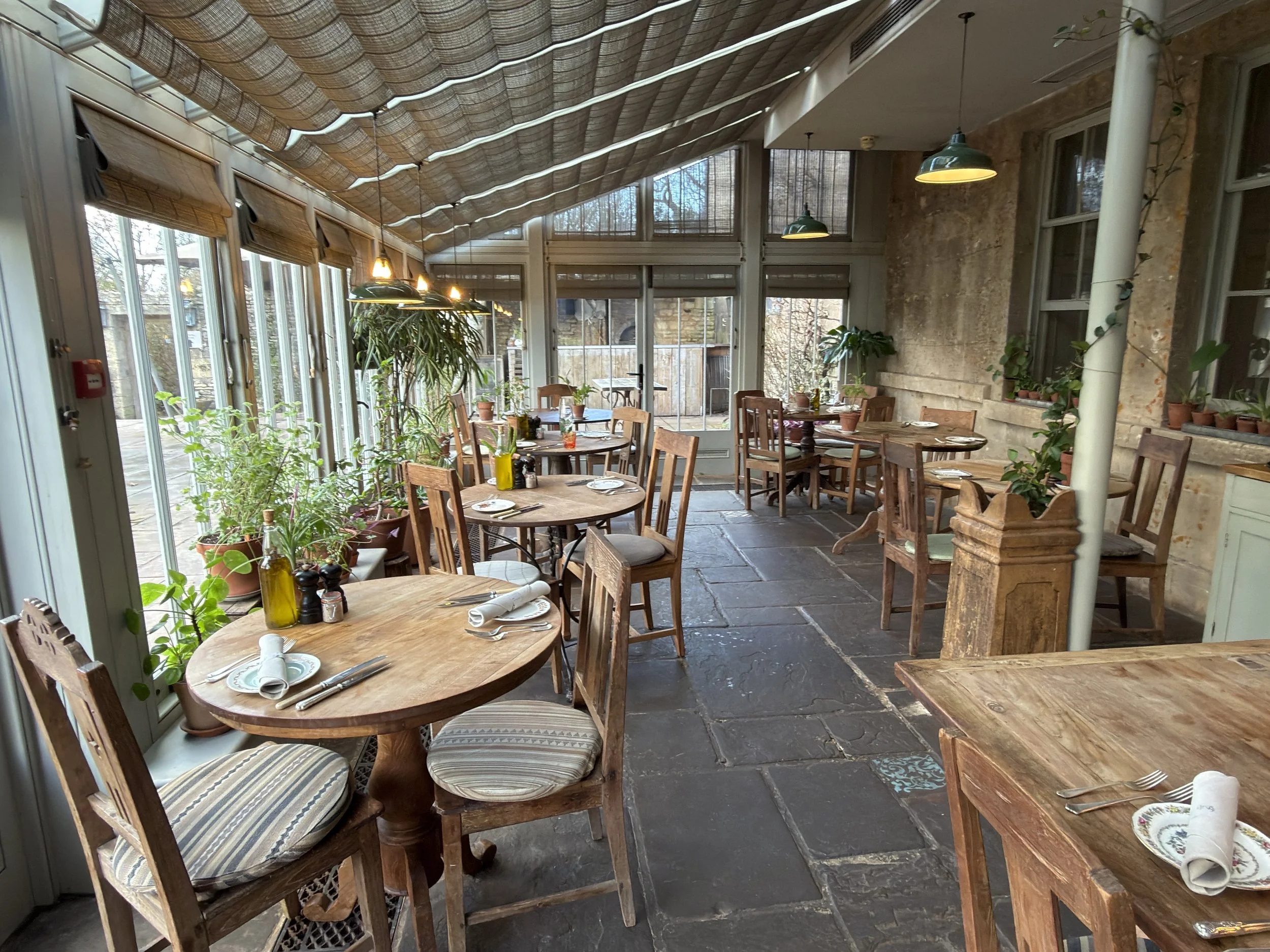
The dining room at The Pig near Bath which opens onto an outdoor terrace during the warmer months
Photo: AJT
Heading north, The Pig near Bath offers a different flavour of the experience. Bath, the elegant Georgian city, which is famous for its Roman baths and honey‑coloured architecture, brings a touch of urban sophistication to the Pig philosophy. Yet even here the atmosphere remains relaxed. Guests spend the day exploring the city before returning to cocktails infused with herbs harvested hours earlier from the garden.
The final stop on my Pig pilgrimage was the Cotswolds — perhaps the most postcard‑perfect countryside in England. Rolling hills, honey‑coloured villages and winding country lanes make the region feel like a film set for a period drama.
The Pig property here sits quietly within that landscape, in another historic house transformed into a relaxed country retreat. This manor’s claim to fame is that it was formerly owned by Rosemary Verey, one of Britain’s most famous garden designers. Some of her projects have included King Charles’ gardens at his country residence, Highgrove House. Naturally, The Pig has maintained her original gardens here which are world renowned
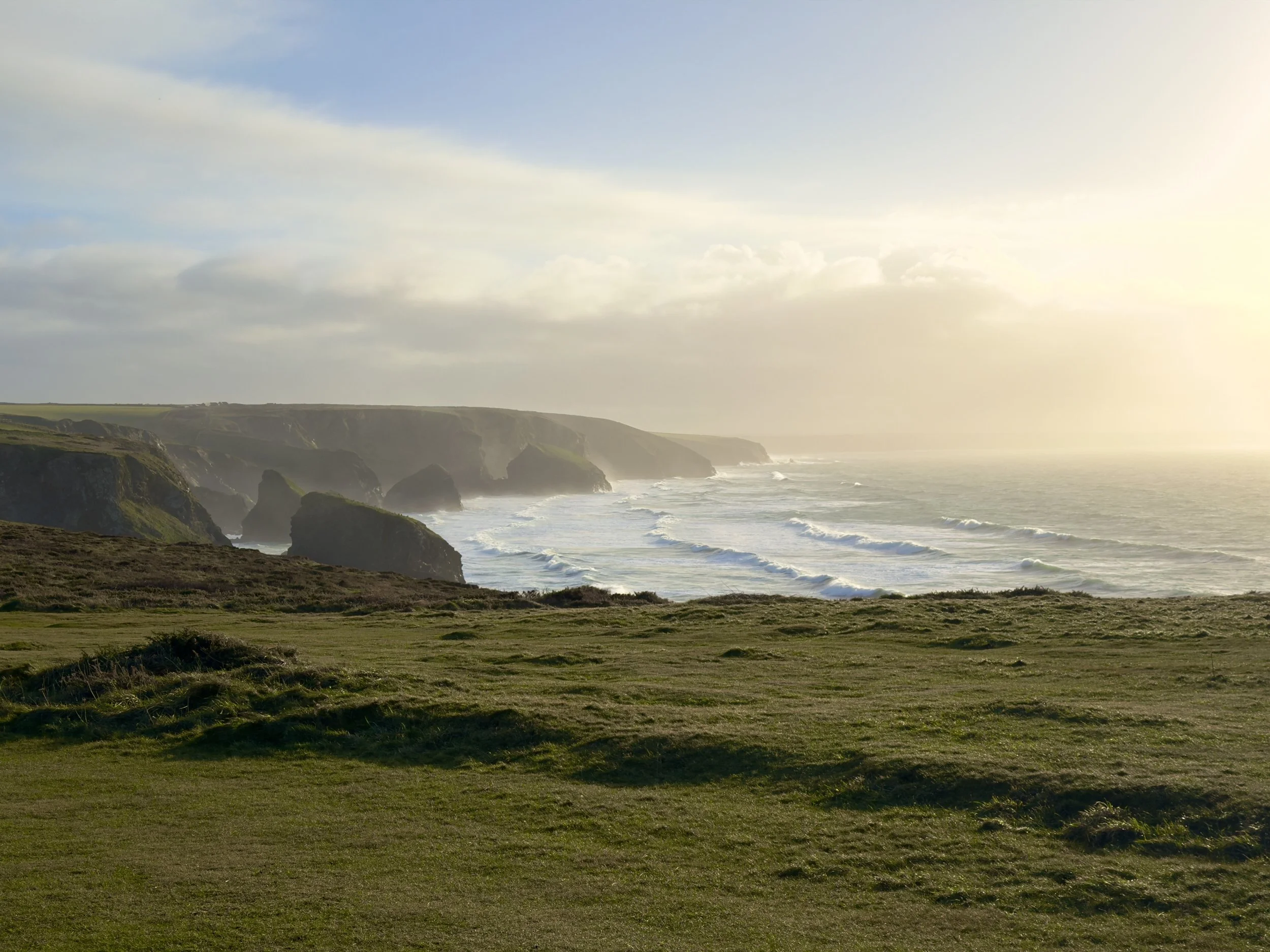
Coastal landscapes in Cornwall offer breathtaking views along hiking trails.
Photo: AJT
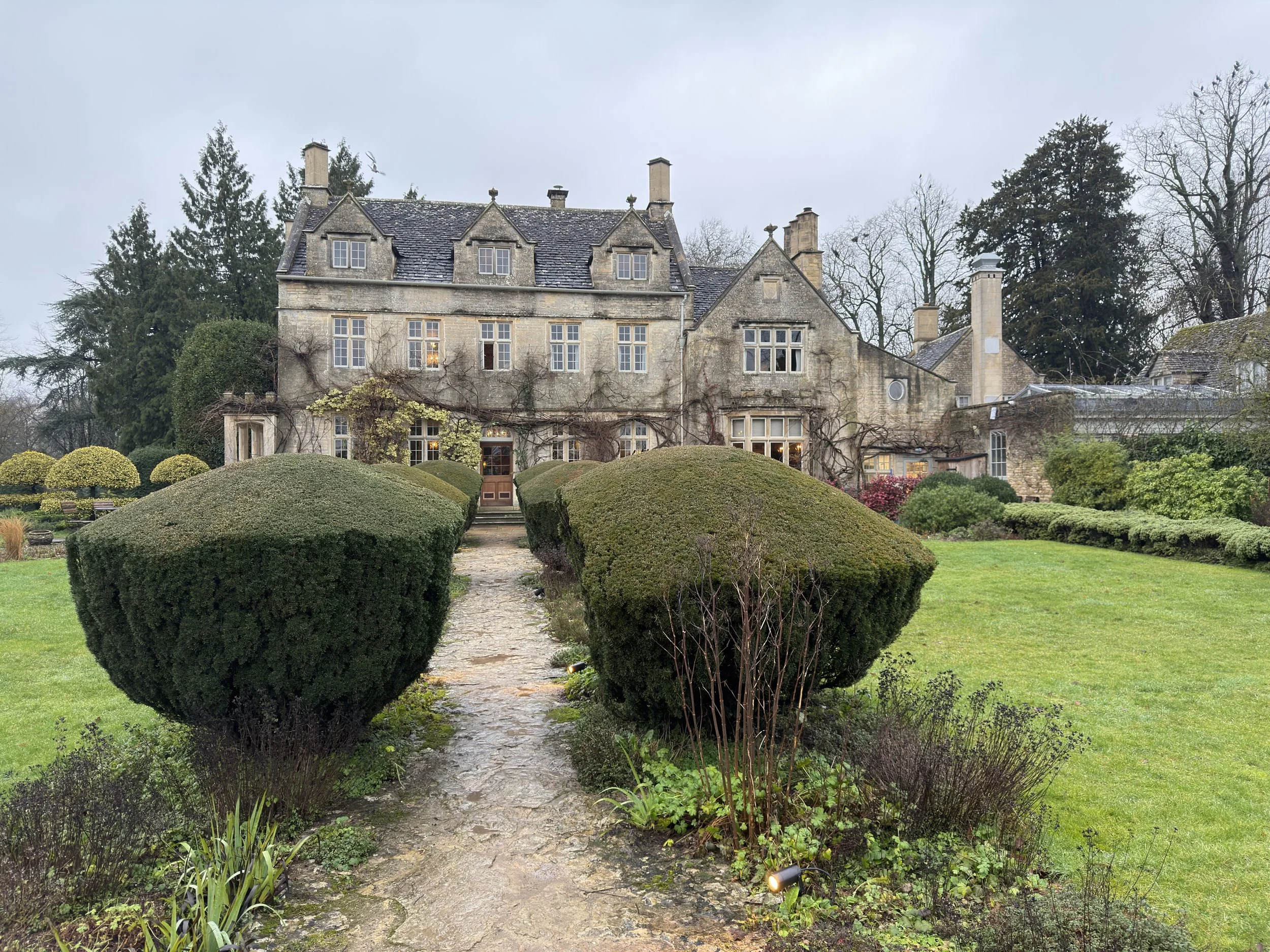
View of The Pig in the Cotswolds as seen from the world-renowned gardens of Rosemary Very, a former resident of this property and the garden designer who worked on King Charles’ and Elton John’s gardens
Photo: AJT
Across all the hotels, no two rooms are the same. Some feature claw‑foot bathtubs and antique wardrobes; others are tucked into garden bothies surrounded by vegetables and fruit trees.
But the true secret ingredient of the Pig hotels may not be the food or the interiors.
It is the people.
Throughout the group, a guiding hiring philosophy shapes the culture: “You can train an employee, but you can’t teach niceness” as the director at Harlyn Bay informed me.
And it shows.
From the gardeners to the chefs to the front desk staff, the warmth feels genuine rather than rehearsed. People are proud of what they are building here.
The Pig hotels are often described as boutique country‑house hotels, but that description misses the point.
They are really a way of experiencing the English countryside — one kitchen garden at a time.
And once you start following the Pig Trail, it becomes very difficult to stop.
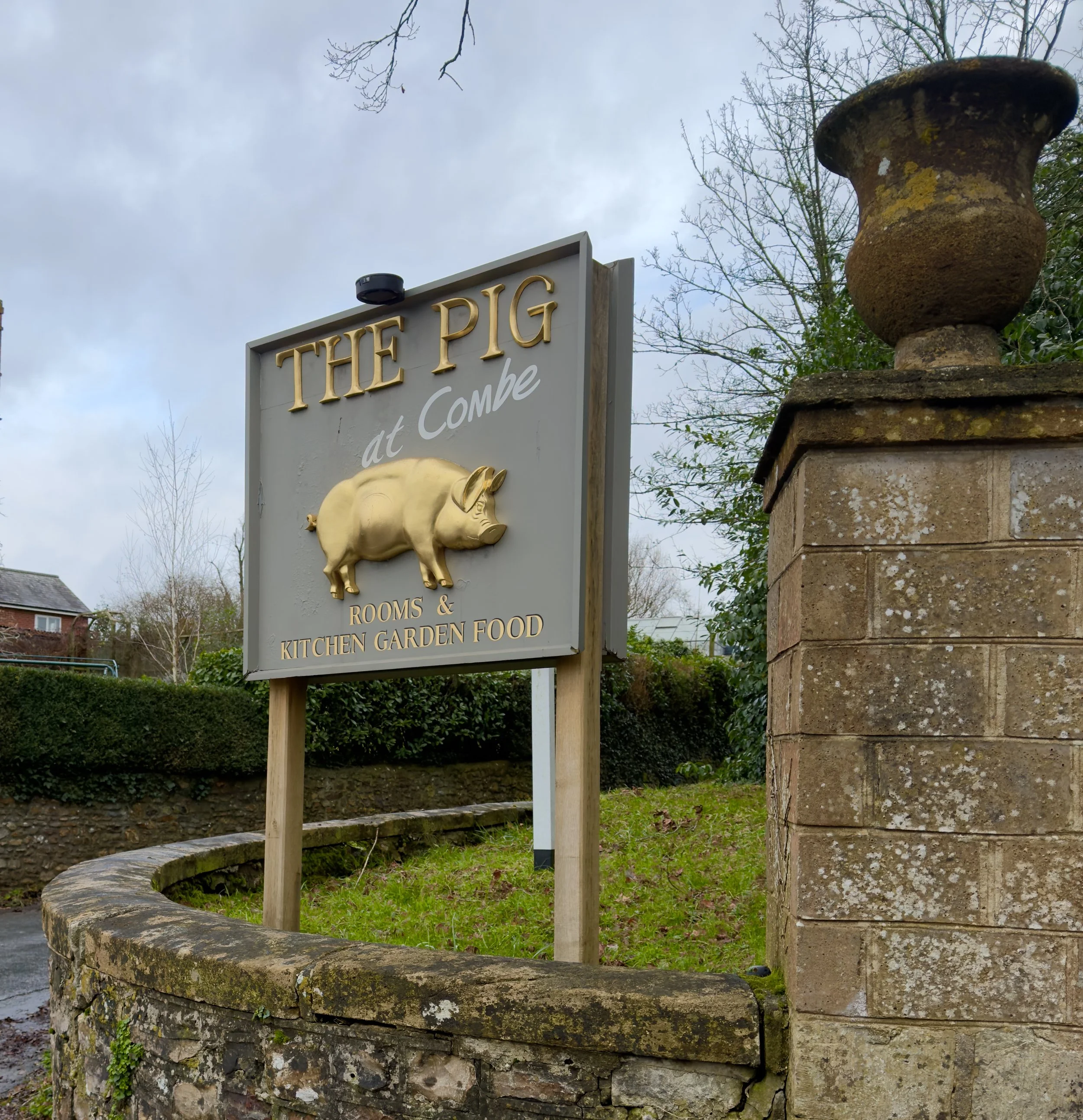
Exterior sign for The Pig at Combe which was hidden on a backroad in Devon
Photo: AJT
For more on The Pig Hotels visit: thepighotel.com/
A.J. Twist is a Montreal-based travel writer and photographer.
Visit www.ajtwist.net
Driving the Pig Trail – A.J. Twist’s Route Map
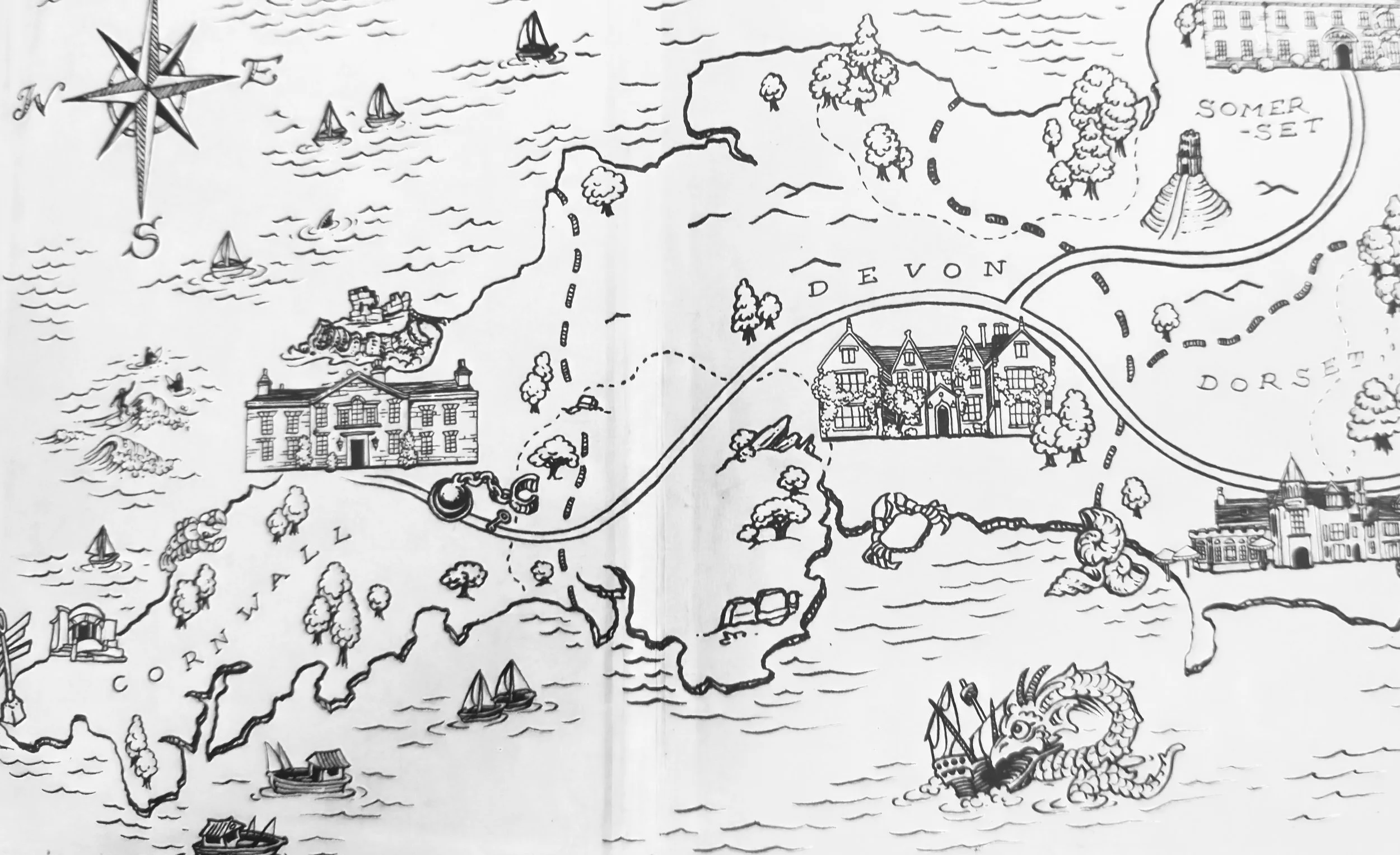
Cornwall – The Pig at Harlyn Bay: Beaches beneath the clifftops, Atlantic surf and spectacular coastal walks.
Devon – The Pig at Combe: Rolling farmland, ancient hedgerows and some of England’s most beautiful rural driving.
The Pig Near Bath: Roman history, honey‑coloured architecture and the perfect Pig base for exploring the city.
The Pig in the Cotswolds: Storybook England. Hilltop villages, stone cottages and winding country roads that reward getting pleasantly lost.
Car rental tips: 1) If you can afford to, try to book a car that is automatic. Most rental cars in Europe are manual. If you are not used to driving on the right side, shifting gears with your left hand can add another layer of complexity to your journey. 2) Get the full insurance coverage offered by the rental company. With these narrow roads you will inevitably be returning the car with a few new nicks or scratches. Your credit-card or own car insurance plans may end up disappointing you here. You can thank me later. 3) Get the in-car GPS option. Your own Google Maps app or Waze might be great at home but can send you delayed directions meaning that you can easily get lost or miss an exit off the endless roundabouts. 4) Watch the speed limit. There are speed cameras everywhere!